
For centuries it was one of the great staples of the Thames and the estuaries of England. Londoners ate eel in pies, stews and jellied form, often bought from small street stalls that served the city’s dock workers, traders and labourers. It was local, abundant and deeply tied to the rivers that flowed through the country.

Today eel carries a very different reputation.
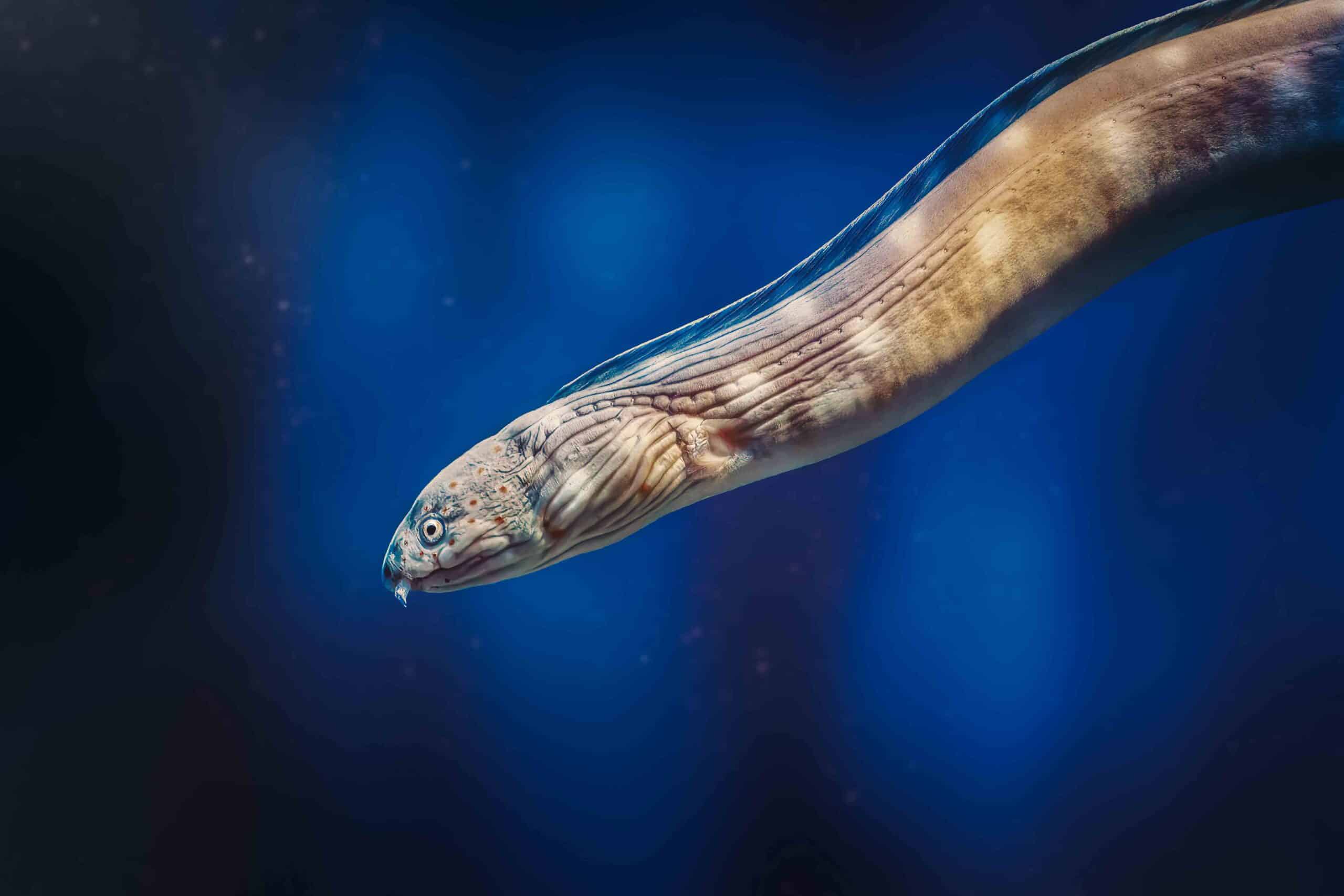
The European eel (Anguilla anguilla) is now listed as critically endangered, its population having declined sharply since the late twentieth century. The reasons are complex and largely environmental: river barriers, habitat loss, pollution and disrupted migration routes have all played their part. Over the last century Europe has engineered many of its rivers for flood control, navigation and hydroelectric power. In doing so we inadvertently interrupted one of the most extraordinary migratory journeys in the natural world.
What is less widely understood is that fishing itself is only a small piece of that puzzle. Eels have one of the most remarkable life cycles of any species found in European waters. Every European eel begins its life thousands of miles away in the Sargasso Sea, a warm and relatively still region of the Atlantic Ocean. There the adult eels spawn before dying, leaving their tiny larvae to drift on ocean currents towards Europe. After one to three years at sea they arrive in our estuaries as transparent glass eels, little more than threads of life carried on the tide.
From those tidal waters they begin a journey inland. The young eels move into rivers, wetlands and lakes where they may spend ten, twenty or even thirty years feeding and growing. Some travel hundreds of miles upstream, inhabiting quiet backwaters, reed beds and marshlands that once defined the British landscape. When maturity finally arrives, the eels transform into what are known as silver eels and begin the long migration back to the Atlantic to spawn, completing a life cycle that may span decades and thousands of miles.
When rivers become blocked or polluted, that migration breaks down. Without the ability to move freely between river and sea, eel populations struggle to recover.
In recent years a great deal of effort has been directed towards reversing that decline. Across the UK and Europe new eel passes have been installed on weirs and dams, allowing the fish to navigate past barriers that once stopped them entirely. Old river obstructions are being removed, floodplains restored and monitoring programmes expanded to better understand eel populations. At the same time large numbers of juvenile eels are being used in restocking programmes designed to help rebuild populations in rivers where they once thrived.
Within that wider conservation effort sits a small but carefully regulated aquaculture industry. Unlike many farmed fish species, eels cannot yet be bred commercially in captivity. Farms therefore raise juvenile eels that are sourced from strictly controlled glass eel fisheries operating under European eel management regulations. These fisheries are tightly monitored, and a significant proportion of the young eels that are captured are reserved specifically for restocking rivers across Europe, helping to support the recovery of wild populations. The remainder are raised slowly and carefully to maturity.
The Devon Eel Company (now called “Meadowland Smokery”) is one of a small number of producers in the UK working within this regulated framework. Their operation is certified by the Sustainable Eel Group, an independent organisation that oversees traceability, responsible sourcing and conservation commitments throughout the eel supply chain. That certification ensures that the eels entering the food system come from monitored sources and that the wider fishery contributes directly to restoration and conservation initiatives.

For restaurants that care deeply about provenance and environmental responsibility, that traceability matters enormously. It allows us to understand not only where an ingredient comes from, but also the role it plays in supporting the wider ecosystem from which it originates. For us, the decision to occasionally serve eel is therefore tied to a broader understanding of its story.
Eel is not an everyday ingredient, nor should it be. It is something to be treated with respect and used sparingly, much like many heritage foods whose ecological and cultural histories are deeply intertwined with the landscapes that produced them. But it is also an ingredient that speaks powerfully about our waterways.
When eels return to rivers, it tells us those rivers are becoming healthier again. Their presence signals functioning estuaries, connected migration routes and improving ecosystems. In that sense, eel acts almost like a messenger for the landscape, telling us when the delicate relationship between river and sea is beginning to recover.
And that recovery is quietly beginning to happen. Across Britain there are increasing signs of eel populations stabilising as conservation measures take effect. Migration routes are slowly reopening and rivers that had long been cut off from the sea are once again becoming accessible to these extraordinary travellers. In that sense, eel represents something quietly hopeful. A species once abundant in Britain’s kitchens may one day return as a symbol not only of our culinary past, but also of river recovery and restored waterways. Until then, sourcing responsibly and understanding the story behind the ingredient matters enormously.
Food, after all, is never just about the plate in front of us. It is about landscapes, rivers and oceans – and the long journeys that connect them.
Few ingredients remind us of that more than the eel.
Here are eight simple yet delicious dressings that pair perfectly with fresh oysters, each designed to complement their natural flavour without overwhelming it.
Read moreThis year, why not surprise your guests with these five exquisite seafood-inspired recipes that are as celebratory as they are delicious?
Read moreAlcohol free cocktails made for all tastes and still using British coastal ingredients.
Read more