
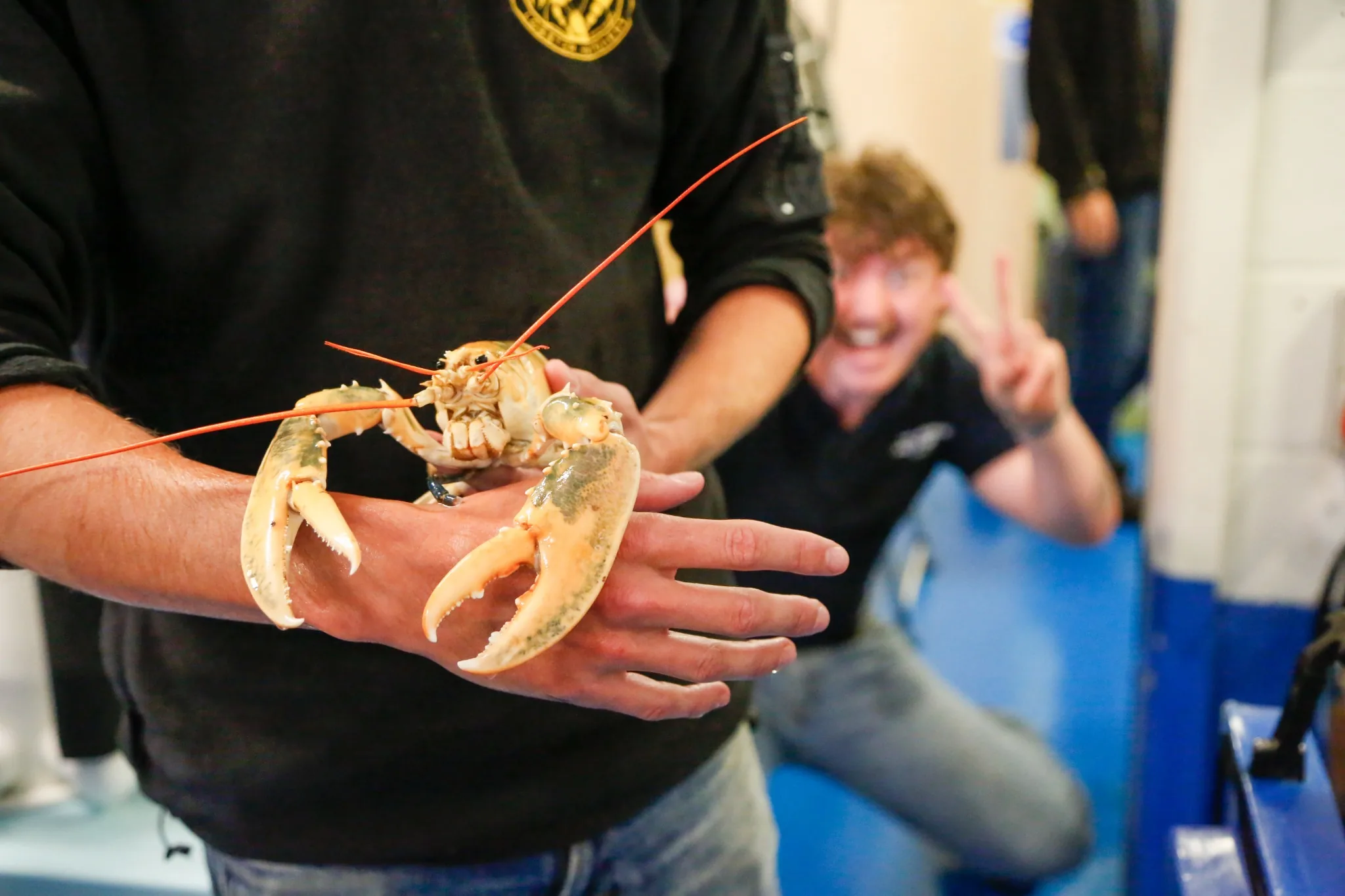
At our World Ocean Day event this year, Nicola from the National Lobster Hatchery joined us at Faber, and everyone who attended adopted a lobster. A rather lovely addition to a day celebrating our seas. It also brought something home: the future of an ingredient we love starts long before it reaches our kitchen.
Lobster does have a habit of stealing the show. Sweet meat, a little butter, something cold in a glass. Understandable really. But behind the treat there’s a much bigger story, and this year we’re supporting the hatchery in Padstow through something very ordinary: the water on your table.
We use our own filtration system instead of bottled mineral water, aiming to reduce glass use and the carbon footprint that comes with it. When guests have sparkling water from that system, Faber asks for a £1 donation per person to the National Lobster Hatchery. It’s a way to support the work and a chance to tell its story. A glass of sparkling water can start a conversation that travels quite a bit further than the table.
We spend a lot of time thinking about what arrives in the kitchen, but the things we pour deserve the same attention. Bottled water is easy to overlook when you’re busy choosing supper. Filtering our own gives us a way to rethink that routine, and asking for a donation with sparkling water connects it to something our guests can picture. Somewhere on the Cornish coast, a team is caring for little lobsters and working out how to give them a better start. That’s a story worth sharing over lunch.

On Padstow’s South Quay, its work has been going on since 2000, with charitable status following in 2004. The idea grew out of concern about declining lobster catches around Cornwall and the Isles of Scilly, despite fishermen putting in more effort. Fisheries officer Edwin Derriman proposed a hatchery as another safeguard alongside measures to protect the wild population. A practical response to a worrying question: what happens if we keep taking more than the sea can replace?
The principle is straightforward, even if doing it properly clearly isn’t. Give young European lobsters some help through their vulnerable early weeks, then release them into suitable coastal habitat. In the wild, newly hatched larvae drift in the water, where plenty of other creatures would happily eat them. At the hatchery they’re carefully reared until they become little lobsters ready for life on the seabed.
All that care for an animal small enough to overlook. Feeding, water quality, equipment and people who know what they’re looking at. None of it happens by magic, and none of it is free.
That’s where financial support matters. A charity needs money for the everyday work as well as the exciting bits: keeping systems running, caring for animals, teaching visitors and supporting research. Admission income, donations and research funding all have a part to play. Supporting that work means valuing the months of care and learning behind the photograph of a tiny lobster heading back to sea.
The ambition stretches beyond releasing more youngsters. The hatchery’s researchers work on better rearing methods, environmental pressures and understanding what happens after release. Its education work brings the story to people who might otherwise only encounter a lobster on a menu. In its 2026 update, the charity reported releasing more juveniles in three months than throughout the previous year. Encouraging progress, with plenty still to learn.

That combination is what appeals to us: more young lobsters reaching suitable habitat, better knowledge of their chances, and more people understanding why it matters. After everyone’s adoptions at World Ocean Day, it feels good to keep that interest going through everyday visits to Faber.
There’s an important bit of honesty needed here, too. Hatchery-reared lobsters can survive in the wild and join the breeding population, but the wider benefits of releases still need measuring. A release count isn’t a count of adults added to the fishery. Supporting the hatchery doesn’t give any restaurant permission to stop asking difficult questions about what it buys.
And lobster does come with questions. It’s delicious, distinctive and a valuable catch for coastal boats. It also carries a price that reflects demand and limited supply. It isn’t an ingredient we can expect the sea to deliver endlessly, at whatever quantity or price suits a menu. A smaller catch has to be allowed to mean less lobster available.
Pots, or creels, offer real advantages. These baited traps sit on the seabed and are hauled up by the boat, allowing undersized animals to be returned alive. Used carefully, they have a relatively low impact on the bottom. It’s a very different method from towing fishing gear across it.
Still, “pot-caught” isn’t the whole answer. Lost pots can keep trapping animals, ropes can cause problems, and too much fishing pressure remains too much fishing pressure. Escape panels and measures that let lost pots open can help. Where a lobster was caught, the condition of that local stock and how the fishery is managed all matter alongside the method. Handling and welfare deserve attention too.

That fits the approach we’ve been building at Faber: British coastal produce, day-boat catches, seasons and suppliers who help us understand what’s available. It also sits alongside the less glamorous decisions, from an electric kitchen to making stock from fish bones and vegetable offcuts. Sustainability has to reach into the ordinary running of the place. The sparkling-water donations belong in that everyday approach, alongside our work with Câr y Môr in Pembrokeshire, whose seaweeds have found their way into our kitchen and bar. Good ingredients tend to come with interesting people attached, and plenty to learn.
Lobster’s place in British food deserves a bit of attention as well. We’ve previously repeated the familiar story of a poor person’s food becoming an aristocratic treat. Looking more closely, that’s too neat, particularly when tales about prisoners and servants get carried across the Atlantic and presented as British history.
Samuel Pepys recorded four lobsters at a splendid dinner in 1663, alongside lamb, pigeons and pies. Hardly a picture of food nobody wanted. Lobster has a long history on British tables, but who could get it, and at what price, depended on place and circumstance. We can enjoy its coastal roots without pretending it followed one simple journey from poverty to luxury.

Today it certainly has that special-occasion reputation. We love the treat of it, but we also want people to see the work behind it. A lobster represents someone’s boat, knowledge, time and living. In Cornwall, Pembrokeshire and other coastal areas, that matters well beyond the dining room. Working harbours support businesses, skills and families, as well as giving the rest of us somewhere lovely to wander on holiday.
Pembrokeshire has its own examples of practical care, including a shellfish initiative that trialled escape hatches and ways to reduce the damage caused by lost pots. Fishermen helped test the ideas. It’s a useful reminder that protecting the sea and earning a living from it need people working together, listening and making changes that function on an actual boat.
It’s also why we want these stories to reach people inland. Sitting in Hammersmith, the coast can feel a long way away, yet the choices made here travel back through the supply chain. The connection is already there. We’re trying to make it easier to see.
For the next generation, there needs to be both a healthy sea and a worthwhile future around it. Young people should be able to learn those skills, work those harbours and carry the knowledge forward. That takes care from everyone involved, restaurants included.
So that’s why we’re keeping the connection with Padstow’s hatchery going beyond World Ocean Day. We want to keep enjoying lobster, and we want the people and places behind it to have a future. A plate of something wonderful ought to give us a reason to care about where it came from. This is one way of putting that care to work.
Here are eight simple yet delicious dressings that pair perfectly with fresh oysters, each designed to complement their natural flavour without overwhelming it.
Read moreThis year, why not surprise your guests with these five exquisite seafood-inspired recipes that are as celebratory as they are delicious?
Read moreAlcohol free cocktails made for all tastes and still using British coastal ingredients.
Read more