
Supermarket withdrawals have put one of our favourite British fish under scrutiny. Where does that leave Cornwall’s fishermen, and the mackerel on our plates?
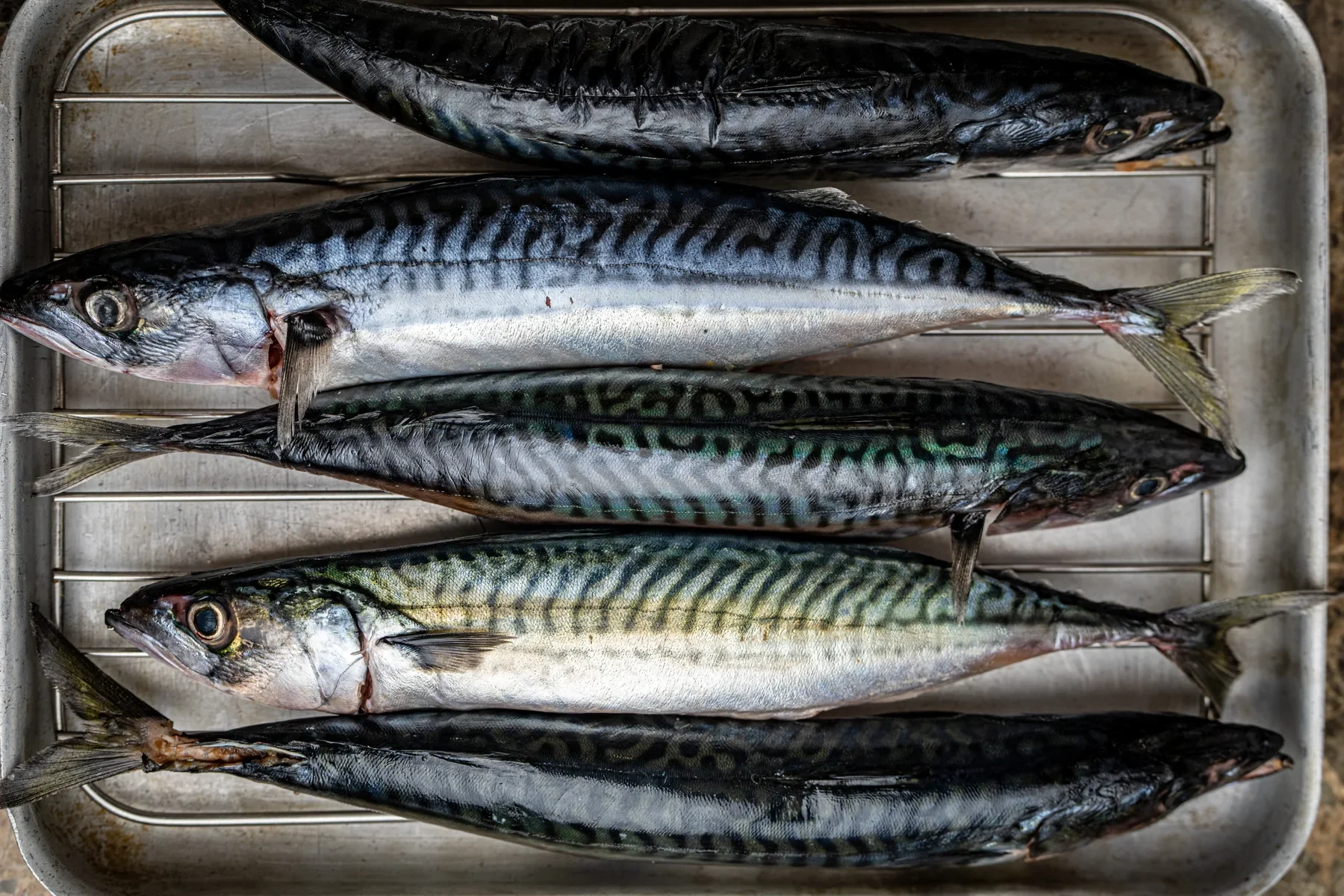
Mackerel needs very little introduction at the table. Crisp skin, richly flavoured flesh, something sharp alongside it. It is a fish made for hot grills, summer evenings and eating close to where it was landed. Along Cornwall’s coast, it also supports small boats, skilled fishermen and a fishing tradition that deserves careful consideration.
So when Waitrose and Marks & Spencer stop sourcing mackerel, we should ask why—and what their decisions mean for those working closer to shore.

This is a voluntary sourcing suspension, rather than a government prohibition on catching or eating mackerel. Waitrose announced its decision on 26 February 2026, setting 29 April as its deadline for suspending fresh, chilled and frozen Northeast Atlantic mackerel sourcing, with tins selling through existing stock. M&S subsequently confirmed that it had also stopped sourcing mackerel. Waitrose announcement, Ocean and Coastal Futures.
The concern extends beyond the North Sea. Mackerel migrate across the Northeast Atlantic, crossing national boundaries and feeding grounds. Countries sharing this resource have repeatedly failed to keep their combined catches within scientific recommendations.
In September 2025, the International Council for the Exploration of the Sea advised a roughly 70% reduction in catches for 2026. Waitrose concluded that the subsequent fishing arrangements fell short of its sourcing standards. Its mackerel had come from Scottish waters. Waitrose’s explanation.
There is, therefore, a legitimate scientific basis for action. Retailers can reduce demand and put commercial pressure on governments to agree effective limits. The drawbacks are blunt messaging and uncertain results: withdrawing a product does not itself secure international agreement, and customers may hear simply that all mackerel fishing is irresponsible.

Cornish handlining operates very differently from industrial pelagic fishing. Fishermen work hooked lines through feeding shoals, taking relatively small quantities. The gear does not scrape the seabed, and unwanted catches are rare. These are substantial environmental advantages, alongside the value of supporting coastal livelihoods. Cornwall Good Seafood Guide: handlining.
But Cornwall’s fish belong to the same wider stock.
That distinction matters. A gentle fishing method can still remove fish from a depleted population. The Marine Conservation Society currently rates even Southwest handline mackerel as “Fish to Avoid”. Cornwall Wildlife Trust’s seafood guide likewise recognises handlining’s low impact while saying it cannot recommend mackerel as sustainable given the stock’s condition. Cornwall Good Seafood Guide.
Cornish fishermen face increasingly patchy catches as well as the risk that supermarket headlines undermine demand for their carefully caught fish. The guide records 245 tonnes landed at Cornish ports in 2024, worth approximately £607,000. Those figures show the fishery’s local importance; they do not establish how much income retailer withdrawals have subsequently cost it. Cornwall Good Seafood Guide.

Atlantic mackerel, Scomber scombrus, grow quickly and generally mature at two or three years. Females release large numbers of eggs in batches; eggs hatch within days, depending on temperature. That gives the species recovery potential, provided enough young survive and fishing pressure allows them to breed. High egg production offers no guaranteed recovery timetable. NOAA Fisheries.
Their year follows spawning, feeding and winter migrations. Northeast Atlantic spawning broadly progresses northwards from late winter into summer. Young fish feed and grow before joining adult migrations. Around Cornwall, availability varies by coast: summer shoals are familiar, but handliners also work autumn and winter fisheries. Local seasonality is more complicated than “summer fish.” ICES Journal of Marine Science, South West Handline Fishermen’s Association.
There is encouraging recent news. On 22 October 2026, six coastal states agreed a 2027 catch ceiling matching scientific advice: 352,938 tonnes. Allocation negotiations continue, and Norway’s government stresses that the stock’s situation remains serious. Progress deserves recognition without declaring recovery complete. Norwegian government.

There are good reasons to love mackerel on a menu. It delivers character, versatility and oily-fish nutrition, including omega-3 and vitamin D. The NHS recommends including oily fish within a balanced diet, with specific limits for some groups. NHS guidance.
At Faber, our published menus have paired smoked mackerel with potato cake and café de Paris butter. Its richness also welcomes gooseberry, pickled cucumber, horseradish or a squeeze of lemon over freshly grilled skin. Faber menus.
The challenge is reconciling that pleasure with the evidence. Supporting Cornish handliners means recognising their skill and arguing for their future, while taking the shared stock seriously. Any continued sourcing deserves clear provenance and regular review against current advice. Our menus can change with the coast—and, when necessary, give a much-loved fish time to recover.

Here are eight simple yet delicious dressings that pair perfectly with fresh oysters, each designed to complement their natural flavour without overwhelming it.
Read moreThis year, why not surprise your guests with these five exquisite seafood-inspired recipes that are as celebratory as they are delicious?
Read moreAlcohol free cocktails made for all tastes and still using British coastal ingredients.
Read more